As climate change becomes a defining issue of our time, more people are looking for ways to align everyday digital habits with sustainability. One area gaining attention is the eco browser, a type of web browser or search engine designed to reduce environmental impact while people browse the internet as usual.
Wave Browser represents a more rigorous approach to eco browsing, one built around verification, transparency, and measurable impact.
But what actually makes a browser “eco-friendly,” and how much impact can it really have?
The Rise of Green Search Engines on the Internet
Most discussions about eco browsing start with Ecosia, the well-known green search engine founded by Christian Kroll. Ecosia, a search engine, uses revenue generated from advertisements shown in search results to fund tree-planting projects around the world.
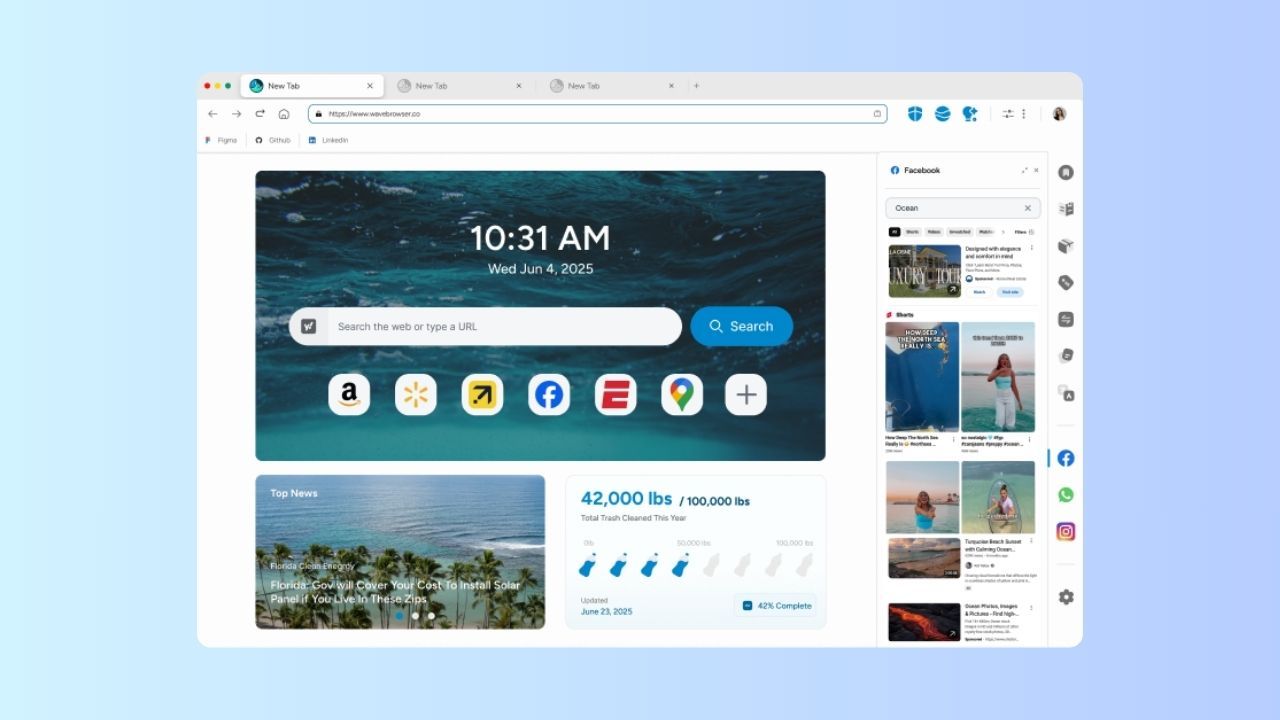
More recently, the idea of eco browsing has expanded beyond search engines. Wave Browser is now part of this next step, approaching sustainability through the browser itself rather than through search alone. Instead of focusing on where searches happen, Wave focuses on how people browse every day.
Wave Browser is a tool designed to work like a familiar, full-featured browser while supporting verified environmental action in the background.
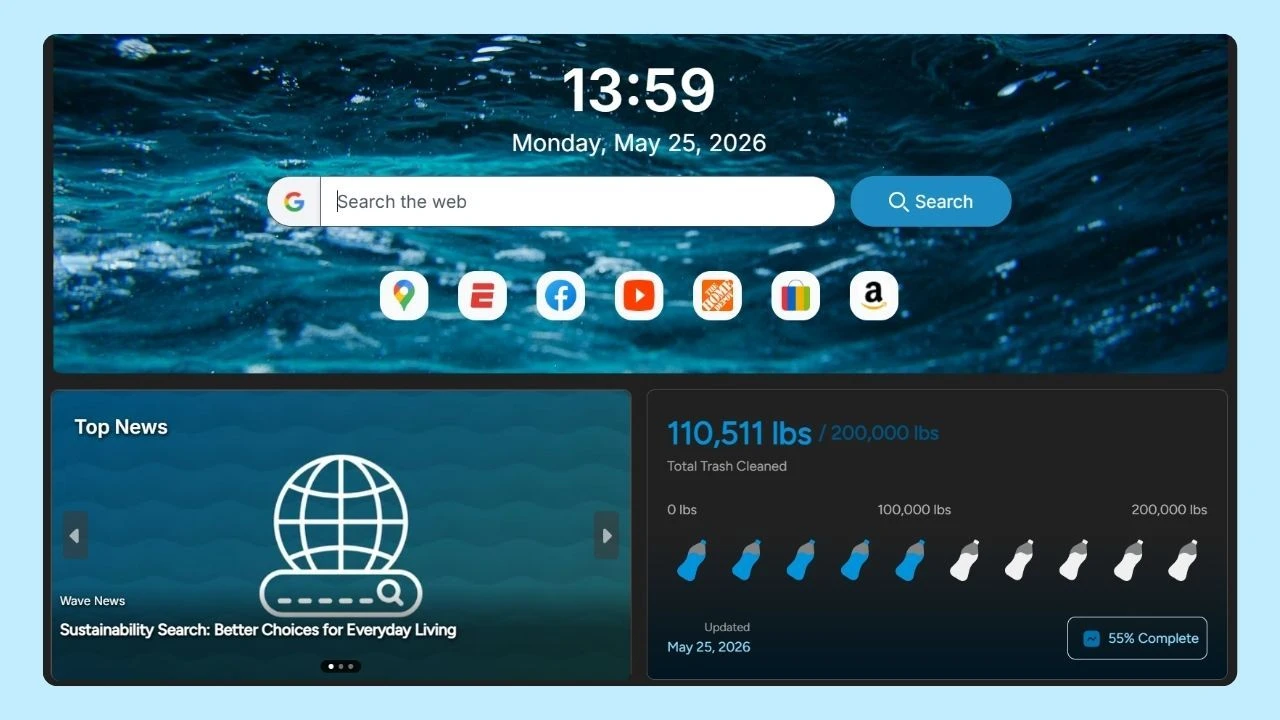
Through its partnership with 4ocean, a certified ocean cleanup organization, Wave Browser helps fund the removal of plastic and trash from our ocean, rivers, and coastlines across regions such as Indonesia, the Dominican Republic, and the United States (Florida). This means everyday activities like opening tabs, reading articles, or working online contribute to measurable cleanup efforts, without changing how users browse.
Together, platforms like Ecosia and Wave Browser show how environmental impact online is evolving: from search-based initiatives to browser-level solutions that connect routine internet use with real-world action.
Benefits of Using Green Search Engines and Eco Browsers as Default
Setting a green search engine or eco-friendly browser as your default can quietly change how your time online contributes to the world around you. Instead of requiring new habits, the benefits come from what already happens every day.
Here are the main benefits:
- Environmental impact without behavior change: Your everyday browsing helps support initiatives like reforestation or ocean cleanup with no new habits required.
- More efficient use of digital resources: Green browsers reduce unnecessary data transfer and server load, helping lower emissions from online activity.
- Clearer transparency: Many eco-focused platforms share public reports or live tracking to show how environmental impact is created.
- Simple climate action: Impact is tied to normal browsing—tabs, pages, and clicks—instead of donations or subscriptions.
- Works with familiar devices: Eco browsers and green search engines work across Android, iOS, Mac, and desktop, with familiar interfaces and settings.
- A smarter default choice: Switching to a greener option aligns daily internet use with sustainability without sacrificing performance.
The Difference Between Google, Microsoft Edge, and Other Apps
Chrome and Edge are options designed to access and navigate the internet, while many other apps are built for specific tasks like messaging, shopping, or social media.
- Google Chrome focuses on speed, extensions, and tight integration with Google services, but relies heavily on data-driven advertising.
- Microsoft Edge is built on Chromium, integrates closely with Microsoft tools, and emphasizes performance and productivity features.
- Other browsers often differentiate by focusing on specific ecosystems, privacy approaches, or niche features rather than broad platform integration.
In short, they’re effective tools for everyday tasks, but they don’t include sustainability or environmental impact as part of the experience.
From Search Engines to Eco Browsers
The first wave of eco-friendly internet tools focused primarily on search engines. Platforms like green search engines showed that online activity could help support environmental initiatives through advertising revenue. This approach helped introduce the idea that digital behavior could contribute to climate action without requiring major lifestyle changes.
However, as browsing habits evolved, so did expectations. People don’t just search—they browse, read, work, stream, and manage daily tasks online. This shift has led to the rise of eco browsers, which extend environmental impact beyond search results and into the broader browsing experience.
Wave Browser represents this evolution. Rather than replacing how people search, Wave focuses on how they browse, pairing a familiar, full-featured browser experience with verified environmental impact.
As the category has evolved, eco browsers tend to focus on a few core principles:
- Reducing operational costs and emissions
- Powering infrastructure with renewable energy, including solar energy
- Minimizing unnecessary data transfer and server load
- Using ad-supported models to fund and invest in environmental projects
Some eco browsers also prioritize responsible data handling, avoiding excessive collection of personal data while maintaining functional search results and modern browsing features.
Wave Browser takes this model further by adding a layer many eco browsers lack: verified, real-world cleanup action.
What Is the Definition of an Eco Browser?

An eco-friendly browser is a type of browser built with environmental responsibility in mind.
Instead of treating sustainability as an add-on, it connects everyday internet use—like opening tabs, viewing pages, or interacting with content—to actions that support the environment. This can include funding cleanup efforts, reducing energy usage across servers, or supporting climate initiatives through advertising systems.
Eco browsers are designed to work like any modern web browser, offering familiar features and compatibility across mobile and desktop devices. The difference lies in how they operate behind the scenes: prioritizing efficiency, limiting wasteful data processes, and providing transparency around how environmental impact is created.
In simple terms, an eco-friendly browser lets users stay productive online while knowing their browsing activity contributes to a measurable, real-world positive impact.
Where Wave Browser Fits In
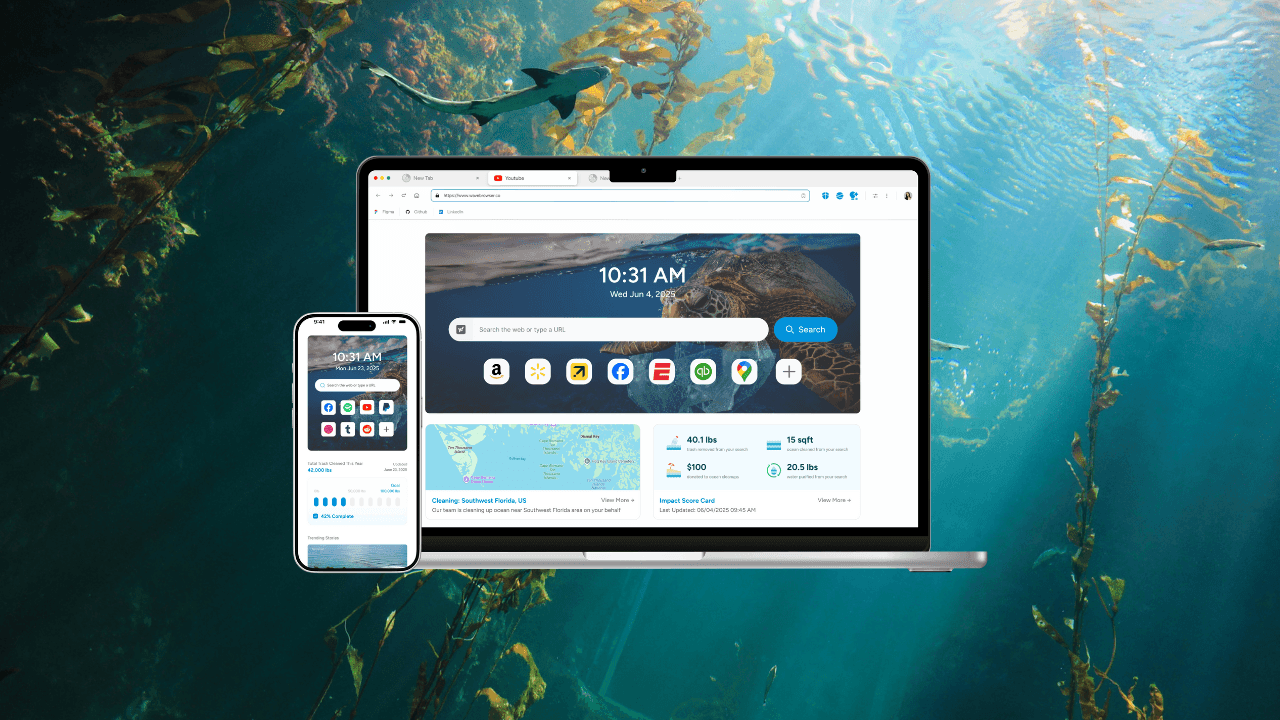
Wave Browser approaches eco browsing from a slightly different angle.
Rather than operating as a search engine, Wave is a web browser that supports verified ocean cleanup through a long-term partnership with 4ocean. Users browse the internet as they normally would—on Windows, Mac, Android, or iOS—while Wave helps fund the removal of plastic and trash from our ocean, rivers, and coastlines across multiple regions.
Wave Browser can work alongside existing search preferences, whether that’s Yahoo, Google, Bing, or another default option. The focus is not on changing how people search, but on adding environmental value to everyday browsing behavior.
Sustainability and Transparency Beyond Marketing
One of the biggest concerns users have with eco tech is whether environmental claims are credible.
That’s why transparency matters, especially when impact is tied to a sustainable business model, not short-term campaigns. Wave Browser addresses this by sharing verified cleanup metrics from its partners, along with live impact tracking inside the browser, so users can see real progress over time.
A truly eco-friendly browser or app isn’t just about sustainability language.
It’s about:
- Clear, ongoing reporting
- Verifiable partnerships
- A long-term commitment to impact, not one-time initiatives
Together, these elements define what a credible eco browser should deliver, not just participation in a cause, but accountability for real-world outcomes. As eco browsing gains popularity, credibility has become the defining line between meaningful impact and marketing claims.
The Future of Eco Browsing
As browsers continue to evolve—with built-in tools, privacy controls, and even AI features like chatbot assistants—the opportunity to connect digital activity with climate action will only grow.
Eco browsers won’t replace mainstream options overnight. But for users who want their time online to support climate action without disrupting their workflow, they represent a meaningful step forward.
Whether it’s tree planting, renewable energy investment, or ocean cleanup, the idea is simple: everyday internet use can support a healthier planet, one tab at a time.