In 1969, the same year Neil Armstrong walked on the Moon, researchers sent a short message between two computers in California. It was supposed to say “LOGIN,” but the system stopped after transmitting the first two letters: “LO.”
That unfinished word became the beginning of something much larger.
Observed on October 29, National Internet Day remembers that early transmission and the decades of innovation that followed. It is an opportunity to explore the history of the internet, recognize how deeply connectivity shapes daily life, and consider the work still required to make the digital world more accessible, useful, and responsible.
For Wave Browser, Internet Day also highlights the role browsers play in this story.
A browser is where many people research unfamiliar subjects, communicate through social media, manage everyday tasks, and explore the World Wide Web. Yet the browser is only one part of a much larger system built by researchers, network engineers, hardware teams, standards organizations, governments, businesses, and internet users around the world.
What is National Internet Day?
National Internet Day is an annual event observed on October 29th. The date recognizes the first host to host transmission over ARPANET (Advanced Research Projects Agency Network), an experimental computer network that helped lay the foundation for the modern internet.
At the time, a team at the University of California, Los Angeles attempted to send “LOGIN” to a computer at the Stanford Research Institute. The receiving system stopped after the first letters “L” and “O” arrived, but the connection had worked. The Internet Society describes it as the first electronic message sent over ARPANET, one of the internet’s predecessors.
Some people call the observance International Internet Day, reflecting the global reach of the technology. The names are often used for the same October 29 commemoration rather than two completely separate occasions.
Several annual observances celebrate the internet, the web, and the role connected technology plays in everyday life. Although their themes sometimes overlap, each date highlights a different part of our digital world, from its early history to online safety and the impact of the World Wide Web.
| Observance | Date | Main Focus |
| National Internet Day | October 29 | The first ARPANET transmission and the development of the internet |
| International Internet Day | October 29 | A global name commonly used for the same historical commemoration |
| World Wide Web Day | August 1 | The web’s influence on how people access information, communicate, learn, and work |
| Safer Internet Day | Second Tuesday in February | Safer and more responsible use of digital technology, including privacy concerns, especially among children and young people |
The Internet and The World Wide Web Are Not The Same Thing
A persistent misconception is that the internet and the World Wide Web are two names for the same technology.
- The internet is the global infrastructure that connects computer networks. It allows different devices and systems to exchange information.
- The web is one of the services that operates through that infrastructure. It organizes pages and resources that people can open through a browser.
The distinction becomes clearer through a simple comparison:
| Technology | What it does | Familiar examples |
| The internet | Connects devices and networks around the world | Email, messaging, file transfers, connected devices, and the web |
| The World Wide Web | Connects pages and online resources through links | Websites, blogs, online stores, and web apps |
| A web browser | Opens and displays web content | Wave Browser |
| A search engine | Helps people find online information | Search services accessed through a browser |
British scientist Tim Berners-Lee invented the World Wide Web at CERN in 1989 to make information sharing easier among researchers. By the end of 1990, the first browser, server, and website were operating at CERN. The original website explained the web project and showed people how to access documents and create servers.
CERN released the web software into the public domain in 1993 and later used an open license. That decision helped the technology spread without requiring organizations to pay for permission to use its basic foundations.
How the Internet Moved From Research Project to Daily Infrastructure
Early researchers could imagine connected computers, but today’s widespread use of the internet might have seemed like a dream from the distant future.
The modern world of the internet includes:
- Global communication: Messages, video calls, and collaborative work can connect people across countries within seconds.
- Social media: Communities can share news, ideas, creative work, and personal experiences across large networks.
- Cloud computing: Files and software can be accessed online instead of remaining on one local machine.
- Mobile access: Smartphones have made online services available while people travel, work, shop, or manage daily responsibilities.
- The Internet of Things: Sensors, appliances, vehicles, and other real world things can exchange information through connected systems.
- Education: Students can access courses, digital libraries, research, and learning communities.
- Healthcare: Connected systems can support remote consultations, research collaboration, health monitoring, and innovative treatments.
- Public services: People can access information, complete forms, schedule appointments, and communicate with institutions online.
These tools can improve quality of life, but their value depends on affordable access, useful services, digital skills, and appropriate safeguards.
Six Billion People are Online, But Access is Not Yet Equal
The internet has become a major part of human history, but participation in the digital age is not evenly distributed.
According to the International Telecommunication Union (ITU), approximately 6 billion people, or 74 percent of the global population, used the internet in 2025. That was an increase from 5.8 billion in 2024. However, another 2.2 billion people remained offline.
The figures also show why coverage alone does not create equal opportunity:
- Around 85.4 percent of urban residents were online, compared with 58.2 percent of rural residents.
- Internet use was estimated at 76.6 percent among men and 70.5 percent among women.
- Although 5G reached more than half of the global population, availability remained concentrated in wealthier countries.
- Affordability and connection quality continued to limit meaningful participation.
This digital divide can affect education, employment, healthcare, financial services, and participation in public life. Having a signal nearby does not necessarily mean that a household can afford a suitable device, pay for enough data, or develop the skills needed to use online services confidently.
Progress is visible across many Latin American countries, but significant differences remain between income groups and urban and rural communities. World Bank research found that household internet access in Latin America and the Caribbean increased from 50.7 percent in 2018 to 68.4 percent in 2022, with stronger access in urban areas.
National Internet Day prompts reflection on this unfinished work. A genuinely global network should not leave billions of people unable to participate fully.
The Questions Facing Today’s Internet

The earliest internet challenges involved connecting machines and agreeing on technical standards. The present issues are broader because online systems now influence communication, commerce, education, politics, and personal relationships.
Data Privacy
Websites, apps, connected devices, advertisers, and online services can collect information about people’s activities and interests. Data privacy therefore depends on more than one setting. It involves informed choices, appropriate protections, responsible business practices, and laws that define how personal information may be collected and used.
For individual users, useful habits include reviewing permissions, using strong and unique passwords, installing updates, checking privacy settings, and thinking carefully before sharing sensitive information.
Freedom of Speech and Access to Information
The internet has given more people opportunities to publish ideas and reach an audience. It has also created difficult questions about misinformation, harassment, censorship, platform power, and the balance between safety and freedom of speech.
UNESCO supports an approach to internet governance built around openness, human rights, privacy, universal access, and technical interoperability. It also calls for greater transparency and accountability from digital platforms.
Net Neutrality
Net neutrality is the principle that internet service providers should not unfairly block, slow, or prioritize lawful content and services. The details differ among countries, but the central questions involve access, choice, and transparency.
Ethical Use of AI
Artificial intelligence is becoming part of search, education, customer service, creative work, healthcare, and other online activities. Ethical use of AI requires attention to accuracy, bias, transparency, intellectual property, security, and the effect automated decisions may have on people.
Users should treat generated responses as a starting point rather than unquestionable fact, particularly when decisions involve health, money, legal rights, or personal safety.
Internet Governance
No single company, government, or association of internet users controls the entire network. Internet governance brings together technical organizations, policymakers, researchers, businesses, civil society, and digital rights groups.
This shared model can be complicated, but it reflects the decentralized structure that allowed the network to grow. The Internet Society summarizes the idea simply: no one is entirely in charge, but many participants help make the system work.
Different Ways to Observe National Internet Day
National Internet Day does not need to be limited to reading a history timeline. It can also be a reason to review how you use connected technology.
Consider using October 29 to:
- Review the privacy and security settings on your devices
- Update important passwords and passkeys, as well as your account recovery information
- Check what personal information your most frequently used apps can access
- Learn about organizations working to reduce the digital divide
- Support programs that provide devices, connectivity, or digital education
- Discuss data privacy and the ethical use of AI with family members
- Explore an open source project or learn how open standards support global communication
The technology may be global, but responsible participation begins with everyday decisions.
From Two Letters to Billions of Connections
The first internet transmission did not arrive as planned. Yet that small exchange became an important moment in the development of a network now used by billions of people.
The story did not end with ARPANET, the first website, or the first search engine. It continues through mobile access, cloud computing, social platforms, connected devices, digital rights debates, and efforts to make internet access a more equal opportunity.
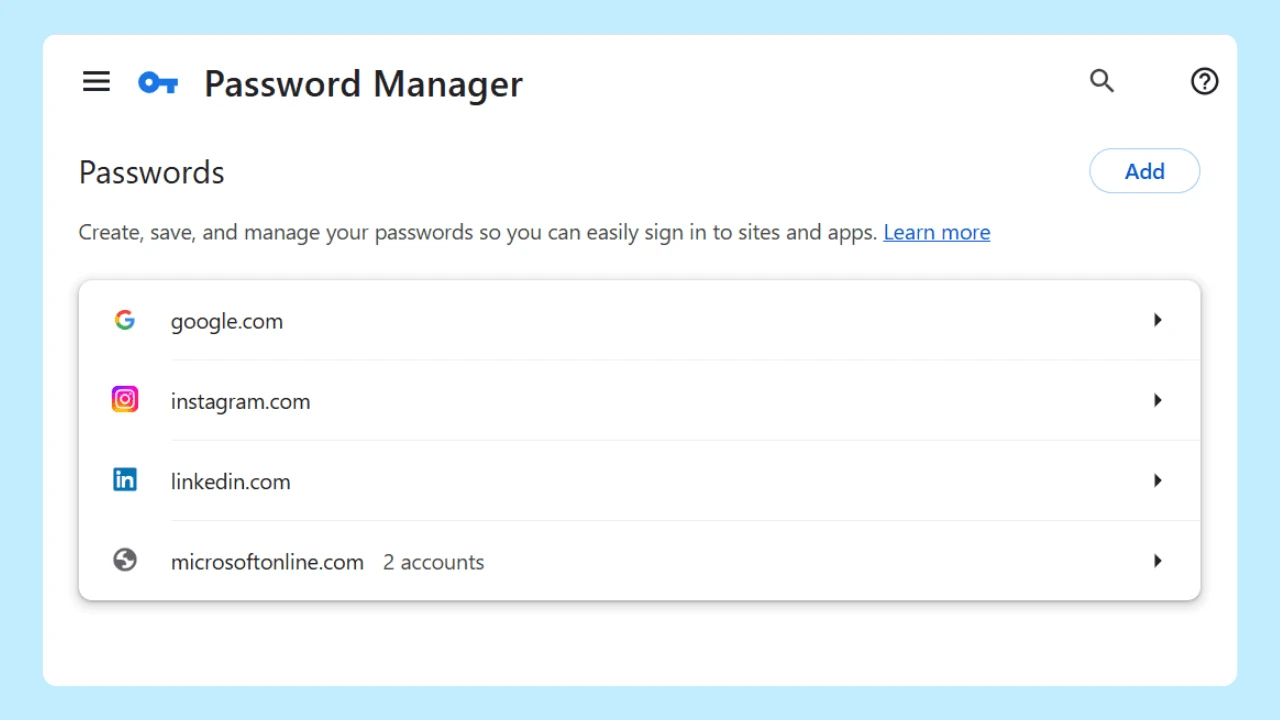
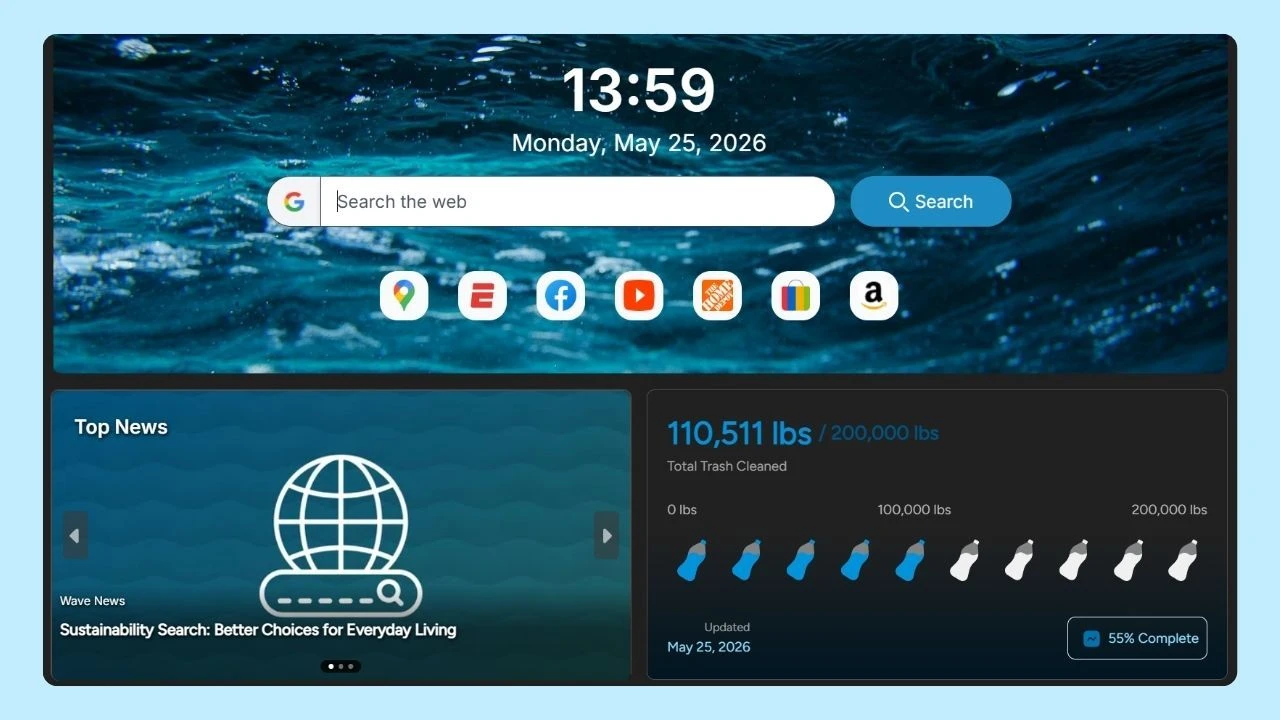
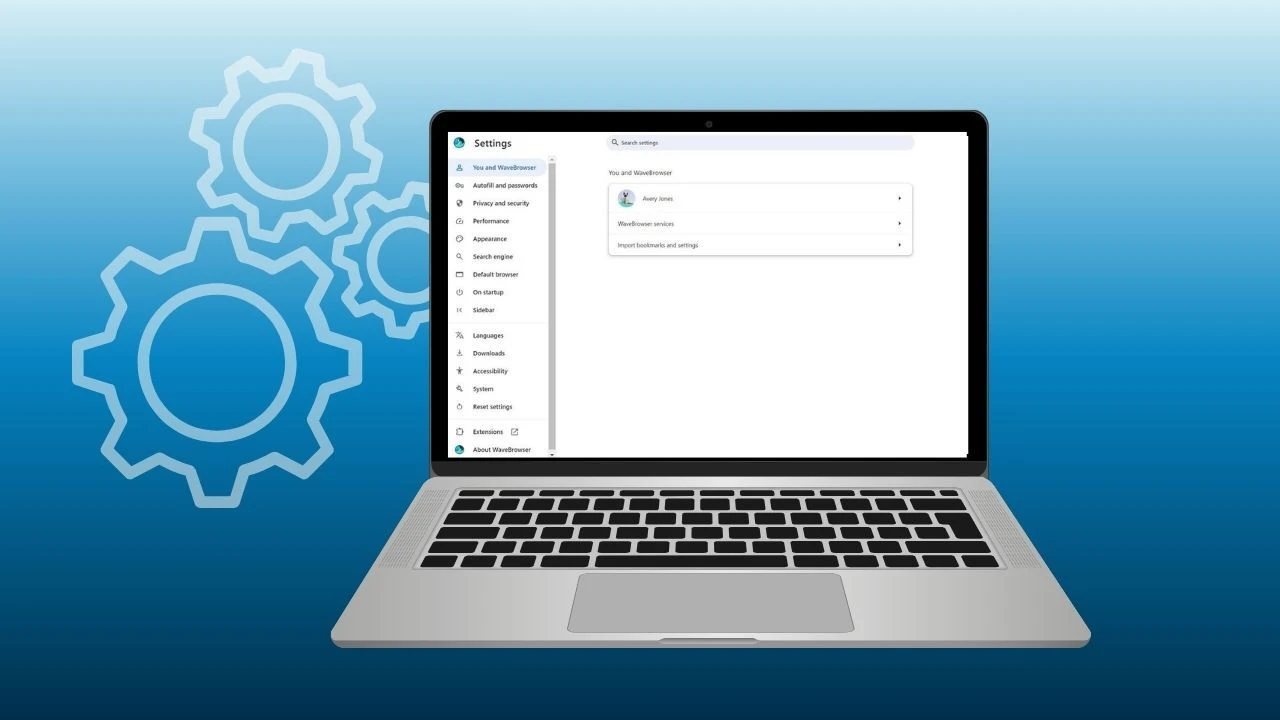
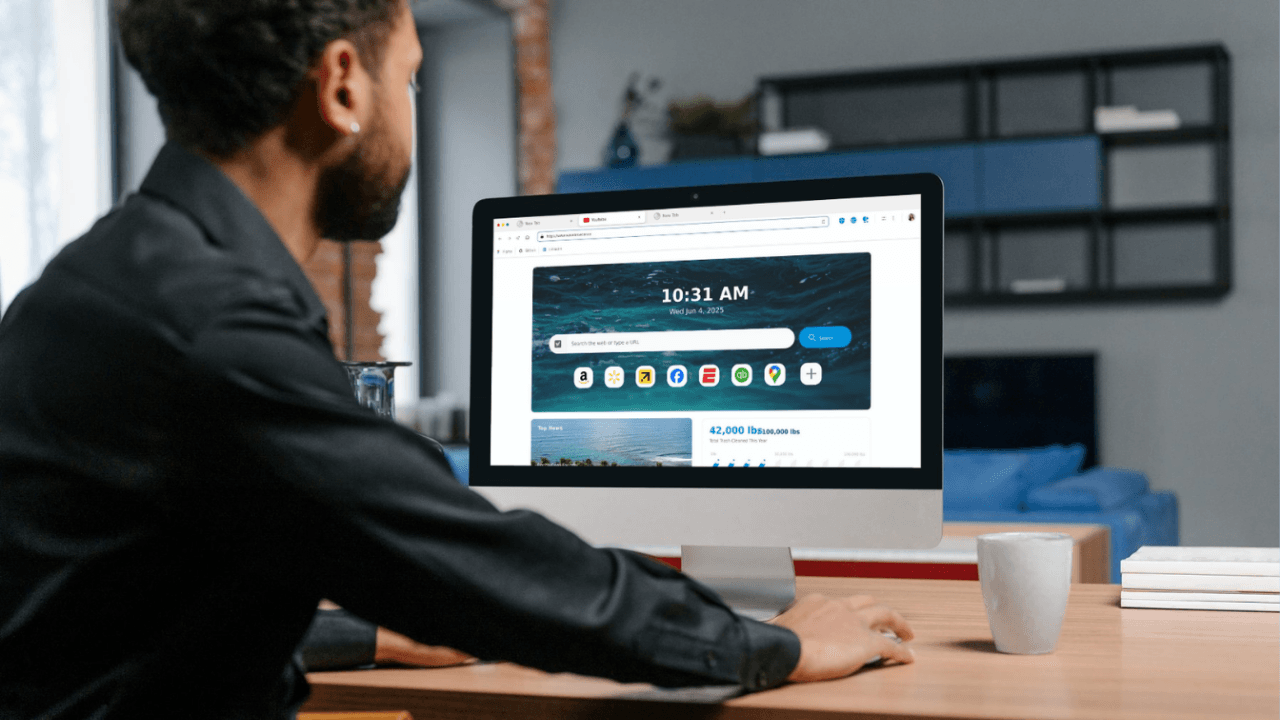
With Wave Browser, users can take part in that connected world through everyday activities such as researching topics, saving useful pages with bookmarks and reading lists, managing logins, and choosing privacy settings that fit their preferences.
National Internet Day is ultimately both a celebration and an invitation to think ahead. The internet has transformed communication and access to knowledge, but its next chapter will depend on whether people can keep it open, useful, accessible, and worthy of trust.