
The web speaks thousands of languages, but your next useful article, customer message, product detail, or research source may not speak yours. AI translation helps close that gap in seconds. Instead of copying every paragraph into a separate service, you can understand unfamiliar web content while keeping your attention on the page and the task in front of you.
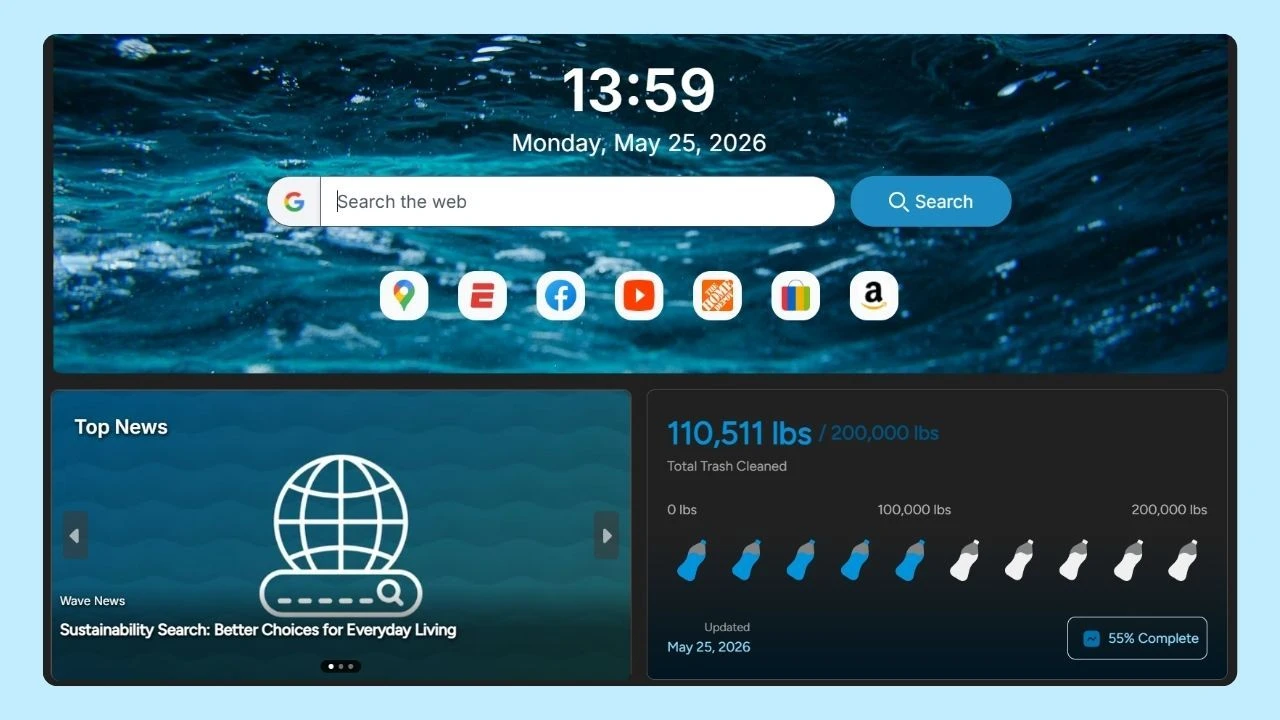
Wave Browser brings this workflow into everyday browsing on Windows and Mac. Its built-in translator is available through the productivity sidebar, where you can translate an entire web page or selected text without installing an extra extension.
When a translation needs more thought, Wave Browser's AI Assistant is also close at hand in the sidebar. You can ask it to explain a phrase, compare wording, adapt tone, or help you think through cultural context.
This guide explains how AI translation works, where it is most useful, and what to consider when choosing a tool to use. It also shows how Wave’s built-in Translator and AI assistant can work together. The goal is not simply to replace words. It is to understand meaning, make better decisions, and communicate with more confidence across language barriers.
What Is AI Translation?
AI translation is the use of artificial intelligence to convert source text from a source language into a target language. It evaluates patterns, sentence structure, context, and likely meaning to produce text translations that sound more natural than a literal word-for-word substitution.
That does not mean every language translator works in the same way. Translation engines vary in their training data, available languages, language pairs, handling of context, and ability to process specialized terminology. The quality can also change by content type. A short travel phrase, a technical manual, legal terms, marketing copy, and casual emails each create different challenges.
An AI translation tool is therefore best understood as a practical assistant. It can provide instant translations and a useful first pass, but the output still deserves review when nuance, accuracy, reputation, or safety matters.
How AI Translation Works
Every translation begins with an input. The system identifies the source language, divides the source text into meaningful units, and evaluates how those units relate to one another. Language detection is especially useful when a page contains a language you do not recognize.
Next, the translation engine estimates the most likely meaning and generates an equivalent in the target language. Neural machine models do this by learning statistical relationships through neural networks. Rather than substituting one word at a time, they consider surrounding words and broader sentence patterns. This helps with expressions whose meaning depends on context.
A large language model can add another layer of flexibility. It may follow instructions such as “keep this formal,” “make this suitable for beginners,” or “explain why this phrase cannot be translated literally.” That makes an AI translator tool useful not only for conversion, but also for analysis, rewriting, and language learning.
However, fluency is not proof of correctness. An output can read smoothly while missing a technical distinction, cultural reference, number, or implied meaning. For professional use, quality assurance should include comparison with the original, terminology checks, and review by someone who understands the subject and both languages. High accuracy is a goal, not a guarantee.
AI Translation, Translation Memory, and Human Translation
Three concepts often appear together, but they solve different problems.
- Machine translation generates a new translation automatically
- Translation memory stores previously approved source-and-target segments so they can be reused
- Human translation relies on a person to interpret meaning and make informed linguistic choices
Translation memory is particularly valuable in localization workflows. If a company repeatedly uses the same product names, instructions, or legal phrases, approved translations can improve consistency and save a lot of time.
Human translators remain important when content carries substantial risk or requires deep cultural judgment. They can notice humor, ambiguity, regional expectations, and brand implications that an automated system may miss. For marketing content, a human reviewer can protect brand voice and ensure that a message feels intentional rather than merely grammatical.
In practice, the right choice is often a combination. AI translation software can create the first pass, translation memory can supply approved wording, and human translators can refine or validate the result. This layered approach balances speed with accountability.
Where AI Translation Still Needs Caution
AI translation has advanced quickly, making it easier to understand content across different languages. However, its accuracy can vary depending on the language pair, content format, and level of context available.
Languages with less training data may produce less consistent results, while idioms, wordplay, dialects, and cultural references can be difficult to translate naturally. Complex scripts, mixed-language passages, and text extracted from images may also introduce errors before the translation process begins.
- Audio content can be more challenging to translate: Voice translation involves several steps, including recognizing speech, detecting the language, interpreting the meaning, and generating text or audio in the target language. Background noise, accents, overlapping speakers, and specialized terminology can affect the final result.
- Sensitive information requires extra care: Before entering private material into an online translator, review the provider’s data privacy practices and follow your organization’s policies. Whenever possible, remove unnecessary personal, confidential, or identifying information before requesting a translation.
- High-stakes content needs human oversight: Medical instructions, legal agreements, safety guidance, immigration documents, and financial disclosures should not rely solely on automatic translation. These materials should be reviewed by qualified professionals or approved language service providers.
The most reliable workflow treats AI as a helpful first step rather than the final authority. It can reduce language barriers, save a lot of time, and make information more accessible, but people are still responsible for reviewing the output and making decisions based on it.
Everyday Use Cases for AI Translation
The most useful translation tool is the one that fits naturally into the task at hand. From researching unfamiliar topics to communicating with international customers, AI translation can make information in different languages easier to understand and use. Here are some practical examples.
International Research
AI translation can help students, researchers, and professionals explore information that may not be available in their preferred language. You can translate an entire article for a general overview or focus on selected paragraphs containing the most relevant details.
For example, someone researching renewable energy could translate a report published by a European organization, while a student could use a translation tool to understand a foreign-language source referenced in an academic paper. When search engines return useful results in different languages, translation makes it easier to evaluate those sources before conducting a deeper review.
Shopping and Price Comparison
When shopping on international websites, AI translation can help you understand product descriptions, specifications, customer reviews, shipping conditions, and return policies. This makes it easier to compare products and prices without relying only on images or short descriptions.
For example, a shopper comparing electronics from different retailers could translate information about battery life, dimensions, included accessories, and warranty coverage. Someone buying clothing could translate fabric details, care instructions, and sizing guidance. However, currencies, measurements, taxes, and final purchase conditions should always be verified separately.
Work Communication
A text translator can help professionals understand messages from international colleagues, partners, or customers. It can also provide a first draft of an email in another language, reducing the time required to prepare everyday communications.
For example, you could translate a customer question before writing a response or ask an AI translator to adapt a message for a more formal business context. Before sending an important email, review names, dates, prices, deadlines, commitments, and tone to ensure the translation accurately reflects your intended meaning.
Marketing and Localization
AI translation can support the first stage of adapting marketing content for audiences in different regions. Instead of producing only one direct translation, you can request multiple alternatives and compare how each version communicates the original message.
For example, a marketing team could translate a product description and then ask an AI assistant to make it sound more conversational while preserving the brand voice. It could also generate several versions of a headline for different audiences. Because slogans, humor, claims, and cultural references may not translate literally, marketing copy should receive human review before publication.
Education and Language Learning
Language learners can use AI translation to explore vocabulary, grammar, sentence structure, and differences in tone. Rather than simply requesting an answer, learners can compare the original text with its translation and ask why particular words or expressions were chosen.
For example, a beginner could translate a short news paragraph and ask for definitions of unfamiliar words. A more advanced learner could request formal and informal versions of the same sentence or ask for examples showing how an expression is used in different situations. This turns free translation into an interactive language-learning activity.
Travel and Daily Tasks
AI translation can help travelers understand practical information such as menus, transportation schedules, signs, directions, accommodation policies, and local forms. It can reduce language barriers when users need quick information in an unfamiliar location.
For example, a traveler could translate a restaurant menu to identify ingredients or dietary information. They could also translate train instructions, hotel check-in details, or a message from a local service provider. Some translation apps may offer voice translation or real-time conversation features, although availability and accuracy vary by language and product.
Document Review
AI translation can make reports, presentations, manuals, and PDFs easier to review when they contain content in another language. Users can translate the entire document for a broad understanding or focus on selected passages that are most relevant to their work.
For example, a professional reviewing an international industry report could translate the executive summary, data explanations, and final recommendations. Someone reading a product manual could translate only the setup instructions or troubleshooting section. Sensitive, confidential, or regulated documents require additional attention to data privacy and organizational policies.
Customer Support
Translation tools can help support teams understand questions from customers who communicate in different languages. They can also assist with preparing an initial response that can be reviewed before it is sent.
For example, a support representative could translate a message describing a technical problem, identify the main issue, and draft a response in the customer’s preferred language. For complex cases, the representative should confirm technical terms and ensure that troubleshooting instructions remain clear and accurate.
Social Media and Online Communities
Online conversations often include posts, comments, captions, and discussions in multiple languages. AI translation can help users understand these conversations and participate more confidently in international communities.
For example, someone could translate comments on a product announcement, understand a discussion in an international professional group, or prepare a caption for followers in another region. Because informal language, abbreviations, and humor can be difficult to interpret, users should consider the broader context before responding.
Content Creation and Writing
Writers and content teams can use AI translation to create early drafts for multilingual articles, newsletters, landing pages, and social posts. An AI assistant can also explain wording choices or suggest alternatives based on a particular audience and tone.
For example, a writer could translate a blog introduction and then ask, “Can you make this version sound more natural for an English-speaking audience?” They could also ask, “Does this translation preserve the original meaning and friendly tone?” These questions help improve the first pass before a human editor completes the final review.
How to Evaluate an AI Translation Tool
Searches for the best AI translator, best browser translator, or best translation software often suggest that one option can win every category. In reality, the right tool depends on your languages, material, risk level, workflow, and budget.
Use these criteria to make a grounded choice:
- Language support and language pairs: Check the available languages and, more importantly, the exact direction you need. Strong support for major European languages does not automatically mean equal results across regional varieties, less-resourced languages, or complex scripts.
- Translation quality: Test realistic samples rather than a single simple sentence. Include long sentences, idioms, specialized vocabulary, formatting, names, and ambiguous phrases. Evaluate whether the result preserves meaning, not only whether it sounds fluent.
- Content type: A tool that performs well on informal text may not be the right tool for technical documentation or marketing content. Determine whether you need a text translator, document handling, webpage support, PDF translation, or voice translation.
- Workflow and usability: Key features may include translating a selected passage, processing a full page, keeping formatting, exporting results, or connecting to writing tools. A browser-integrated option reduces setup for everyday reading, while a localization platform may suit larger teams and repeated projects.
- Privacy and governance: Review how a service handles submitted content, account data, storage, and model training. Data privacy matters whenever text contains customer, employee, legal, health, financial, or unpublished business information. Follow your organization’s approved tools and policies.
- Review controls: Look for ways to compare source and target, preserve terminology, collect feedback, and involve reviewers. Tools/software should support responsible decisions, not hide uncertainty.
- Cost and limits: A free plan, free tier, or free version may be enough for occasional text translations. Check restrictions involving document size, advanced features, supported formats, and commercial use. “Unlimited words” may still come with fair-use rules, speed limits, feature exclusions, or changing terms. Read the current service details before relying on a free translation offer.
The best solution is the one that fits the real task, protects the content appropriately, and makes review practical.
How to Translate While Browsing with Wave

Wave’s built-in Translator keeps website translation within the browsing workflow on supported Windows and Mac versions. Because the tool is built into the productivity sidebar, there is no need to add a separate extension to find, install, or manage.
To translate a full page, open the website in a tab, select the Translator from the sidebar, and choose the destination language. Translating the entire page is useful when navigation labels, headings, and body text all matter. It helps you stay oriented while reading rather than moving fragments between tabs.
For a smaller task, highlight the relevant text and use the sidebar to translate the selection. This is often the better option for a paragraph, product detail, unfamiliar expression, or short email. Keeping the source and translation close together makes comparison easier.
You can also use the translating tool when working with a PDF. Focus on the passage you need, check that the correct source language and target language are selected, and compare names, values, and technical terms with the original. If a scan contains text as an image, recognition quality may affect the result.
Example workflow: imagine that you are comparing two international product pages. Keep the first page open, translate its specifications, and note the key price and shipping details. Then open the second one in another tab and repeat. You can compare the translated information without adding another browser component or breaking your research flow.
Questions to Ask Wave Browser's AI Assistant About a Translation
A direct translation answers “What does this say?” An AI assistant can help with the next questions:
- “What does it mean here?”
- “How else could I say it?”
- “What should I verify?”
Wave Browser's AI Assistant is accessible through the productivity sidebar, so you can use it alongside the built-in Translator.
For best results, provide the text you want analyzed, name the intended audience, and state the goal. Do not assume an AI agent automatically knows the page context; include the relevant sentence or paragraph in your prompt.
Try questions such as:
- “Translate this paragraph from Spanish into English and preserve a friendly, professional tone.”
- “What does this phrase mean in this business context? Give a literal meaning and a natural English equivalent.”
- “Compare this source text with my translation. List any missing details, changed numbers, or shifts in tone.”
- “Give me three translations of this headline for a general audience and explain the difference between them.”
- “Rewrite this translated marketing copy so it sounds concise while preserving the original claim and brand voice.”
- “Which words in this passage may be difficult to translate because they depend on culture or context?”
- “Explain this grammar choice to a beginner who is studying the target language.”
- “Create a short glossary of repeated terms in this document, with the source language and suggested English translation.”
- “Is this sentence formal, neutral, or casual? Suggest an alternative for a customer-support email.”
- “What facts, measurements, names, or dates should a human reviewer verify in this translation?”
These prompts turn Wave Browser's AI Assistant into a writing and review companion. Its responses can help you explore options, but they should not be treated as certified translations or final quality assurance.
Improving Translation Quality
Better input usually produces better output. Start with clean source text. Fix obvious typos, remove unnecessary ambiguity, and break very long passages into logical sections. If a pronoun could refer to two different subjects, replace it with the intended noun.
- Specify the target language precisely: “Portuguese” may not be enough if the audience expects a particular regional variety. The same principle applies across different languages: name the region, audience, formality, and purpose when they matter.
- Provide context: Tell the AI translator whether the content is a support message, product page, contract summary, lesson, or campaign. Business context can change the appropriate meaning of a term. A “charge,” for example, may refer to a fee, an electrical state, or an accusation.
- Protect terminology and brand voice: Supply preferred product names, phrases that should not be translated, and a small approved glossary. For repeated professional work, translation memory can help keep wording consistent across projects.
- Review systematically: Compare every number, unit, date, proper noun, link, and call to action. Read the result as a complete piece, not only sentence by sentence. If the content affects rights, safety, health, finances, or binding commitments, have it reviewed by a qualified human translator or an appropriate language service provider.
Finally, test the result with a native or highly proficient reviewer when possible. Generative AI can suggest alternatives, but a person can judge whether the final version is accurate, natural, inclusive, and suitable for the audience.
Frequently Asked Questions

What is the difference between a translator tool and an AI translator?
A basic translator tool converts text between languages. An AI translator may also follow instructions about tone, audience, format, or explanation. Product labels vary, so compare their actual capabilities.
Is neural machine translation the same as generative AI?
They overlap but are not identical. Neural machine translation is designed specifically to predict translations, while generative AI can handle broader language tasks. Some modern products combine multiple engines or model types.
Can an AI translation tool replace human translators?
Not in every use case. It can produce a useful draft, help readers understand a page, and speed up routine work. Human review remains valuable for high-risk, creative, culturally sensitive, or publication-ready content.
What makes the best AI translation tool?
There is no universal best AI translator. The right choice depends on language support, language pairs, quality, data privacy, content type, review needs, integration, and cost. If you are studying a new language, consider whether the platform can also work as a language learning tool by explaining grammar, comparing translations, and providing vocabulary examples in context.
Can I use a free version for professional use?
Possibly, but check current terms. A free plan or free tier may limit volume, document formats, advanced features, data protections, or commercial usage. Do not assume “unlimited words” means unrestricted use.
How can language learners use AI translation?
They can request literal and natural versions, ask for grammar explanations, compare synonyms, create practice sentences, and identify differences in formality. They should try understanding the source before revealing the translation.
Does a translation app provide high accuracy in real time?
Accuracy varies with languages, audio quality, context, and subject matter. Instant translations are convenient, but important information still needs verification.
What should I include in an AI translation prompt?
Provide the source text, source language if known, target language, audience, tone, business context, desired format, and any terms that must remain unchanged.
Translate Without Losing Your Place
AI translation can make global information more useful, but the best results come from combining speed with thoughtful review. Choosing the right tool starts with the language pair, content type, privacy requirements, and consequences of an error.
Wave Browser keeps everyday translation close to the page.
On supported Windows and Mac versions, the built-in Translator is available through the productivity sidebar, allowing you to translate pages or selected text without adding a separate browser extension. When you need to explore meaning rather than simply convert words, open Wave AI in the sidebar and ask for alternatives, context, grammar explanations, or a review.
Used together, these tools can support research, work, shopping, language learning, and communication across different languages. Translate quickly, ask better questions, verify important details, and keep moving through the web with confidence.